


 |  |  |  |  |
|---|---|---|---|---|
 |  |  |  |  |
 |  |  |
Conservation Education
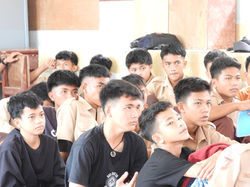
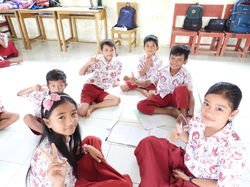
A comprehensive conservation education outreach was conducted across nine schools on three islands, namely North Pagai, South Pagai, and Sipora, reaching more than 519 students and 70 educators at all levels of education. The program delivered interactive lessons covering biodiversity, ecosystem roles, and conservation practices, with a particular focus on local primates such as the Bilou and Masepsep and their ecological importance. To make learning both engaging and memorable, facilitators employed visual and hands-on methods including presentations, multimedia tools like videos and laminated animal visuals, coloring contests, and competitive events like "Rangking 1" quizzes and team-building games. Collaboration with teachers ensured the lessons remained relatable and impactful, while the distribution of posters and participation incentives further strengthened community engagement. The effectiveness of the program was reflected in pre- and post-tests, which demonstrated a significant increase in student knowledge across conservation topics, with students showing notable enthusiasm throughout games and quizzes. Beyond knowledge-building, the program actively encouraged students to translate their learning into action by adopting simple conservation habits such as waste management, reforestation, and protecting local fauna.
 |  |  |  |  |
|---|---|---|---|---|
 |  |  |  |  |
 |
Community Development
The Mentawai Islands possess abundant natural resources, including fertile land that yields crops such as bananas, coconuts, and spices like nutmeg and cloves, alongside rich marine biodiversity offering diverse fish and seafood. Recognizing the untapped economic potential embedded in the islands' unique traditions of crafting, food preparation, and ecotourism, a series of training sessions were conducted to enhance agricultural productivity and diversify product value, teaching communities to transform bananas into marketable goods such as chips, flour, and baked goods, and to innovate coconut by-products including virgin coconut oil, charcoal, and handicrafts. Alongside these efforts, initiatives were launched to promote local seafood products like fish crackers, nuggets, and dried octopus, broadening the economic base of coastal communities. Women played a central role in this development push, receiving specialized training in advanced food processing techniques covering banana chips and jengkol crisps, as well as skill-building in business management and marketing to support entrepreneurial ventures, further strengthened by the establishment of collaborative women's groups designed to facilitate resource and expertise sharing. Nevertheless, the path to sustainable economic growth faces significant structural challenges, as limited road access, unreliable electricity, and weak internet connectivity continue to hinder market access and daily operations, making the resolution of these infrastructure and communication barriers a pivotal prerequisite for the expansion of local industries and broader community participation in economic activities.
 |  |  |  |  |
|---|---|---|---|---|
 |  |  |  |
Local Perspective Survey
The Mentawai Islands harbor extraordinary biodiversity of global significance, serving as home to six endemic primate species, including the Bilou (Kloss's Gibbon) and Masepsep (Mentawai Langur), a distinction that places the region among the world's top conservation priorities. Local communities across the islands broadly recognize the fundamental importance of forests, viewing them not only as critical habitats that sustain ecological balance but also as essential sources of food, water, and traditional medicine that underpin daily life. However, these vital ecosystems face mounting threats, as deforestation driven by logging and land conversion continues to erode forest cover, with industrial logging activities in Sipora and Pagai Selatan standing out as major drivers of habitat loss, while hunting practices compound the pressure, ranging from intensive activity in Pagai Selatan to moderate levels in Pagai Utara and minimal impact in Sipora. Conservation awareness varies considerably across the islands, with Pagai Utara displaying moderate understanding and a disposition toward sustainable forest use, Pagai Selatan demonstrating lower awareness where hunting remains culturally ingrained as a symbol of pride, and Sipora emerging as a beacon of community-led conservation through its strong local support for forest protection and its largely intact forest cover. Moving forward, bridging education gaps that limit understanding of conservation's long-term benefits remains a pressing challenge, yet the islands' rich traditions and cultural practices present meaningful pathways for conservation-based education, with Sipora's model of engaged communities and preserved forests offering a replicable blueprint for sustainable practices across the broader archipelago.